
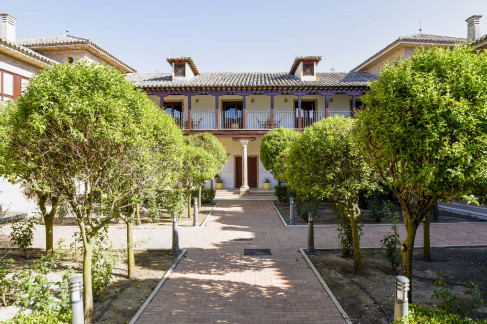
The Valdeparaíso Palace is one of the most emblematic buildings in the historic city of Almagro, in the province of Ciudad Real, in the heart of Castilla-La Mancha. This majestic building, dating back to the 17th century, stands as a testament to the importance of Almagro during the Spanish Golden Age, when it was the administrative and commercial centre of the Order of Calatrava. Throughout the year it hosts a large number of events such as the International Congress of Hunting Gastronomy, CIGAC, which in 2024 celebrates its first edition on 19 and 20 November.
History of the Palace
The Valdeparaíso Palace was commissioned by the noble family of the Marquises of Valdeparaíso, who held important positions in the Court of the Austrias. This family, of Basque origin, settled in Almagro attracted by the economic possibilities and social prestige that the city offered. The palace served as a stately residence and was a symbol of the power and influence of the local nobility at that time.
Over the centuries, the building has gone through various stages of use and conservation. Despite the renovations and adaptations, the palace has managed to maintain much of its original structure, making it one of the most valuable examples of civil architecture in La Mancha. After having been a private residence, in the 20th century the palace was acquired by the Almagro Town Council and, later, by the Ciudad Real Provincial Council. Both institutions have been responsible for its restoration and conservation for institutional and cultural use.
Architecture and design
The Valdeparaíso Palace stands out for its sobriety and elegance, following the canons of Baroque architecture. The building has a rectangular floor plan and is organized around a large central courtyard, a common feature in La Mancha palaces of the period. The exterior facades are austere, reflecting the Spanish Baroque style, which preferred simplicity on the outside and reserved ornamentation for the interior spaces.
The main entrance to the palace is adorned with a large carved stone doorway, which leads to a hallway that leads to the central courtyard. This courtyard is one of the architectural gems of the palace, with galleries supported by Tuscan columns and an interior garden that provided freshness in the hot La Mancha summers. The various rooms of the palace, both for private use and for service, are distributed around the courtyard.
Current uses
Today, the Valdeparaíso Palace is a space of great cultural relevance in Almagro. After being restored, it has become a meeting and conference centre, and hosts various activities related to the cultural and artistic life of the city. In addition, it is one of the venues for the prestigious Almagro International Classical Theatre Festival, one of the most important events on the theatre scene in Spain.
Held every summer, the festival attracts thousands of visitors and theatre companies from around the world, with many of the events and performances taking place in Almagro’s historic spaces, including the Valdeparaíso Palace. This use of the palace as a cultural space reinforces its role as a bridge between Almagro’s past and present, linking its noble history with today’s artistic vitality.
A symbol of Almagro’s historical legacy
In short, the Valdeparaíso Palace is not only a building of great architectural beauty, but it is also a symbol of Almagro’s historical splendour. Thanks to its good state of preservation and its use as a cultural space, the palace remains a point of reference for those visiting the city in search of its rich history and vibrant cultural life.